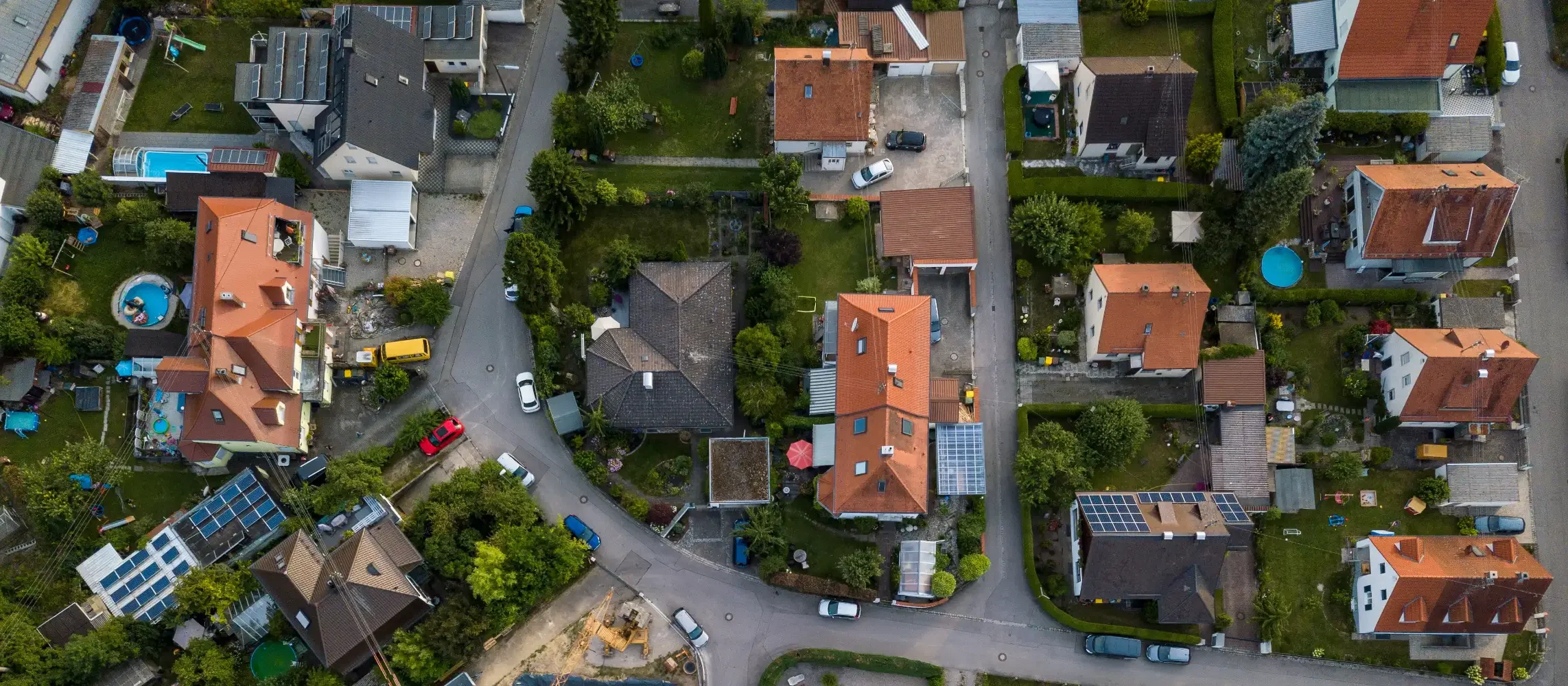
The Frankfurt am Main Regional Court has banned Google from publishing images of a property on Google Earth and Google Street Maps. The ruling of 24 September 2026 has been picked up and commented on with interest by the press and other media. Indeed, the ruling is as interesting as it is controversial.
It concerns the tension between technology, freedom – namely freedom of information and freedom of occupation – commerce and privacy. That is what makes the case interesting. The judgement is controversial because, should it stand – that is, should it not be overturned by a higher court – it effectively states that the contested practice of displaying non-anonymised properties – whether by Google or anyone else – is, to a significant extent, unlawful and must cease. In 2020, the Itzehoe Regional Court had ruled differently in a similar case, in favour of Google.
The case is straightforward. Using Google Earth and Google Maps, one can view the claimant’s property, including from above and zoomed in. Google uses images taken from a great height by satellites for this purpose. They show details of the property that cannot be seen from the street; in other words, they are private. The claimant objected to this practice and demanded in court that the display of these images be stopped. He considered his general right to privacy to have been infringed. Google defended itself by arguing that ‘personality’ also encompasses participation in public life – that is, visibility – and that making the images available serves the spirit of adventure and discovery inherent in human nature, and ultimately also the general public’s interest in education and information, and even, last but not least, democracy. - The Regional Court was not convinced. It held that the right to privacy relates not only to the social aspect of a person’s identity, but also, and in particular, to the private aspect. Because data – and images of properties are nothing other than data – can be collected, linked and processed in a wide variety of ways, particularly through the use of so-called artificial intelligence, the publication of such images allows conclusions to be drawn not only about the property but also about the people living there. The risk that the images – particularly in the case of properties belonging to presumably wealthy individuals – could also be used for criminal purposes should not be overlooked. It is obvious that one can infer the owner from the property, even if erroneous conclusions remain possible. It is irrelevant that Google’s services are also used to identify holiday destinations. The claimant’s property is a residential house. If the reproduction of these images were permitted solely because they were taken from a great height and without any further direct detriment to the claimant – in other words: secretly and without the possibility of direct defence – it would be impossible to explain why one should not permit someone who, for example, wished to take the same images using a drone. The spirit of adventure and curiosity of the Google companies and their customers did not justify this intrusion. The fundamental rights of Google to be taken into account in the balancing exercise – freedom of occupation, freedom of information – are not affected in any relevant way. It is also readily reasonable to anonymise the images so that, whilst the property, its location and boundaries remain visible, the private areas are not visible to third parties. Finally, it is also irrelevant whether the property owner is wealthy and might therefore be a more likely target for criminal acts than others; what is decisive, rather, is the unjustifiable infringement of the general right of personality, insofar as it protects individuals from the public dissemination of images of their private spaces, which include areas of the property not visible to the general public.
However fundamental this – not yet final – decision may be, it leaves one or two questions open; not with regard to the correctness of the reasoning – though it will be interesting to see whether this stands, as the Itzehoe Regional Court, as mentioned, ruled differently in a similar case in 2020 (10 O 84/20 of 11 June 2020) – but rather regarding the distinction from cases that might be decided differently: when is a property considered private in this sense? How difficult must it be to view it from the outside? What if the resident is a public figure or has themselves published images showing similar scenes somewhere – one might think of Instagram and the like? What if one occupant consents, or even wishes the images to be published for whatever reason, whilst another does not? And, finally, might it be possible to turn a massive volume of property images into a massive business? Massive numbers of cease-and-desist letters – not, for once, sent to a massive number of recipients, but to just one?
(Frankfurt am Main Regional Court, judgement of 24 September 2026, 2-03 O 388/25)





Subscribe to our GvW Newsletter here - and we will keep you informed about the latest legal developments!